

Whether you're a small business sending your first parcel abroad, an e-commerce seller fulfilling international orders, or someone sending a gift to a friend in another country — shipping from Finland has its own rules, quirks, and opportunities. This guide covers everything you need to know: which carriers to use, what it costs, how customs works, and how to avoid the most common mistakes.
Why shipping from Finland is both easy and tricky
Finland's location makes it an interesting case. You're in the EU, which means shipping within the Eurozone is straightforward — no customs paperwork, no duties, fast transit times. But Finland is also geographically peripheral. You're not Paris or Frankfurt; you're further from most major European population centers than, say, a sender in Germany or the Netherlands. That adds a day or two to many routes.
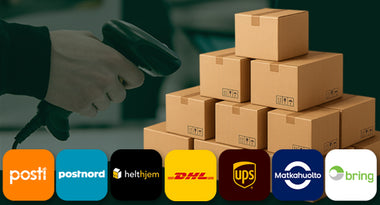
The good news: Finnish postal and logistics infrastructure is excellent. Posti (formerly Finland Post) is reliable and affordable for domestic and EU shipments. DHL, FedEx, UPS, and a growing number of regional carriers give you competitive options for international shipping.
Carriers operating in Finland
Here's an overview of the main carriers you'll encounter when shipping from Finland, with honest notes on where each one excels.
Posti
Finland's national postal operator is the backbone of domestic shipping and a solid choice for EU parcels up to 30 kg. Posti's SmartPOST network means your recipients across Finland, Estonia, Latvia, and Lithuania can pick up from thousands of parcel lockers — which significantly reduces failed delivery attempts.
Best for: Domestic shipments, Baltic region parcels, low-weight EU packages. Watch out for: Slower than couriers for time-sensitive international shipments. Customer service can be patchy for lost parcels.
DHL Express
DHL Express is the premium door-to-door courier with next-day and two-day options to most of Europe and major global cities.
Best for: Business parcels, time-sensitive international shipments, documents. Watch out for: DHL Express pricing is high for heavier parcels. Always compare their rate tiers carefully.
FedEx
Strong for North American shipments and for anything where tracking precision and guaranteed delivery windows matter. FedEx has good coverage across Finland but fewer collection points than Posti or DHL.
Best for: North America, Asia-Pacific, high-value business shipments. Watch out for: Not always competitive on EU routes where Posti or regional carriers win on price.
UPS
Similar profile to FedEx. Strong global network, reliable tracking, competitive on business volumes. UPS has a solid Finland presence and works well for regular volume shippers who can negotiate rates.
Best for: Regular volume shippers, North America, business-to-business. Watch out for: List-price rates are steep. The value only appears when you negotiate or use a comparison service.
Matkahuolto
A Finnish transport company with an extensive locker and freight network across Finland. Less known internationally but very useful for large and small domestic shipments and some Nordic routes.
Best for: All kind of domestic shipments (B2B and B2C). Freight shipments also available. Watch out for: Limited international footprint compared to global carriers.
DB Schenker (DSV)
For freight and larger shipments (think pallets, B2B logistics), DB Schenker is the main player in Finland. If you're shipping more than 50–100 kg regularly, this is the world you need to explore.
Best for: B2B freight, pallet shipments, industrial logistics. Watch out for: Not necessarily best for small parcels.
Pricing and transit times
Prices vary significantly based on weight, dimensions, destination, and which carrier you book through. The table below gives you a realistic ballpark for standard parcels booked at list prices.
| Route | Weight | Carrier | Est. price | Transit time |
|---|---|---|---|---|
| Finland → Finland (domestic) | Up to 2 kg | Posti / Matkahuolto | €5–8 | Next day |
| Finland → Finland (domestic) | Up to 10 kg | Posti / Matkahuolto | €8–14 | 1–2 days |
| Finland → Estonia | Up to 5 kg | Posti / DHL | €9–16 | 1–2 days |
| Finland → Sweden | Up to 5 kg | Posti / DHL | €14–24 | 2–3 days |
| Finland → Germany | Up to 5 kg | DHL / UPS | €16–30 | 2–4 days |
| Finland → UK | Up to 5 kg | DHL / FedEx | €22–38 | 2–4 days |
| Finland → USA | Up to 2 kg | FedEx / DHL Express | €35–65 | 3–5 days |
| Finland → USA | Up to 2 kg | Posti International | €18–30 | 7–14 days |
Note: These are indicative list prices as of early 2026. Actual prices depend on exact dimensions (volumetric weight often applies), collection vs drop-off, insurance, and fuel surcharges.
Volumetric weight — the hidden cost
This catches out a lot of senders. Carriers charge based on whichever is higher: the actual weight of the parcel, or its volumetric weight. The standard formula is:
Volumetric weight (kg) = (Length × Width × Height in cm) ÷ 5000
So a large but light parcel — say, a flat-pack furniture piece, pillows, or bulky clothing — can be far more expensive than its actual weight suggests. Pack tightly. Remove excess air. Use the smallest box that protects your item.
Customs, duties, and regulations
Getting customs right is the difference between a smooth delivery and a parcel stuck at the border for weeks.
Shipping within the EU
If you're shipping to any EU member state — Germany, Sweden, France, the Netherlands, Estonia, etc. — customs declarations are not required for most goods. Finland is fully in the EU Customs Union. Your parcel moves freely. You'll still need to declare the contents and value on the carrier's documentation, but there are no duties and no customs checks in the traditional sense.
The only exception is excise goods: alcohol, tobacco, and certain other products have specific rules even within the EU. Check carrier-specific restrictions if you're shipping these.
Shipping outside the EU — key rules
To Norway: Norway is not in the EU (it's in the EEA but outside the EU Customs Union). Shipments over NOK 350 (approximately €30) are subject to Norwegian VAT and potentially duties. You'll need a CN22 or CN23 customs declaration.
To the UK: Post-Brexit, the UK is treated as a third country. Shipments over £135 in value require a full customs declaration (CN23), and UK import VAT applies. For B2B shipments, EORI numbers are required on both sides. Build in an extra 1–3 days for customs processing.
To the USA: US import duties by HS codes apply. A CN22 (for under €300) or CN23 form is required for all postal/courier shipments.
To Russia and Belarus: As of 2025, postal and courier services to Russia and Belarus remain severely restricted due to sanctions. Most commercial carriers will not accept shipments to these destinations. Check the latest guidance with your carrier before attempting to ship.
Required documentation for international shipments
For non-EU destinations you typically need:
- Commercial invoice (for goods being sold) — 3 copies, stating value, HS tariff code, and country of origin
- CN22 or CN23 customs declaration — CN22 for items under €300, CN23 for items over €300 or any commercial goods
- EORI number — required if you're shipping commercially from or to an EU business
Most major carriers generate these documents automatically when you book online. Double-check that the HS code is correct for your product type — wrong HS codes are one of the most common causes of customs delays.
Prohibited and restricted items
Some items cannot be shipped internationally from Finland regardless of carrier. The standard prohibitions include:
- Dangerous goods (lithium batteries in some configurations, flammable liquids, certain chemicals)
- Counterfeit goods
- Live animals (without specific carrier approval and CITES documentation)
- Cash, negotiable instruments
- Firearms and their components
- Drugs and controlled substances
Lithium batteries deserve a special mention. Phones, laptops, power banks, and many other electronics contain lithium batteries, and there are strict rules about how they can be shipped, especially by air. Most carriers have specific guidelines — always declare batteries in your item description.
Packaging requirements and tips
Finnish carriers are generally not precious about packaging, but poor packing is the single biggest cause of damage claims — and most carriers limit their liability if damage results from inadequate packaging.
The five rules of good packing:
1. Use new or near-new boxes. Used boxes that have been crushed and retaped have significantly reduced structural integrity. If the item is valuable, use a new box.
2. Protect with the right fill. Bubble wrap is fine for most items. For fragile or valuable goods, consider foam inserts. Leave at least 5 cm of padding between the item and the box walls on all sides.
3. Tape properly. Use packing tape (not masking tape or electrical tape) and seal all seams including the edges. The H-tape method — a strip down the centre seam and strips across each end — is the standard.
4. Label clearly. Attach the label to the largest flat surface of the parcel. Cover with clear tape to protect from moisture, but don't tape over the barcodes.
5. Account for volumetric weight. Pack compactly. Every extra centimeter of box adds to the volumetric weight calculation and costs you money.
Carrier-specific size limits (standard parcel services, not freight):
| Carrier | Max weight | Max dimensions |
|---|---|---|
| Posti (domestic) | 30 kg | 60 × 60 × 60 cm |
| Posti (international) | 30 kg | Length + girth max 200 cm |
| DHL Express | 70 kg | 120 × 80 × 80 cm |
| FedEx International Priority | 68 kg | 274 cm longest side |
| UPS Expedited | 70 kg | 270 cm longest side |
Anything heavier or larger moves into freight territory, which requires a different booking process and pricing structure.
How Packrooster makes this easier for Shopify stores
If you're running a Shopify store and shipping from Finland, the operational side of shipping — booking labels, handling customs paperwork, managing returns, keeping customers updated — can easily eat hours out of your day. That's the problem Packrooster is built to solve.
Packrooster is a Shopify shipping app that connects all your carriers in one place. Instead of logging into Posti, DHL, and FedEx separately to process orders, you handle everything from inside your Shopify dashboard. You can connect as many carriers as you use — Posti, Matkahuolto, DHL, UPS, FedEx, GLS, DB Schenker, and more — and manage all your shipping from a single interface.
Here's what that looks like in practice for a Finnish Shopify merchant:
Shipping labels and fulfillment. Print shipping labels directly from Shopify orders, individually or in bulk. Packrooster also supports barcode scanning so warehouse staff can scan an order, validate the items inside, and generate a label in a single step — significantly cutting fulfillment time during peak periods.
Automatic customs documents. For orders going outside the EU — to the UK, USA, or elsewhere — Packrooster generates the required customs declarations automatically, with the correct carrier-specific and country-specific details. It also supports paperless/electronic trade, so you don't need to print and physically attach customs forms to every parcel.
Return labels. You can generate return labels on demand or automatically include them with shipments. This is particularly useful if you're selling to consumers in the EU or UK, where easy returns have become a baseline customer expectation.
Checkout control. Packrooster lets you control exactly which shipping options and pickup points appear to each customer at checkout — based on their location, the products in their cart, or postal code rules. This means Finnish customers can see Posti parcel lockers, Swedish customers see PostNord options, and German customers see DHL — all automatically, from the same store.
Automations. Repetitive tasks like tagging orders, triggering fulfillments, sending tracking notifications, and requesting carrier pickups can all be automated. For stores processing hundreds of orders a week, this alone saves meaningful time.
For Finnish e-commerce merchants specifically, Packrooster is a practical tool for managing the complexity of shipping to both domestic customers and the broader EU and international markets — all without leaving Shopify.
Learn more about Packrooster →
Frequently asked questions
How long does standard shipping from Finland to Germany take? With most major carriers (DHL, UPS, Posti), EU parcels from Finland to Germany take 2–4 business days door to door. DHL Express can do it in 1–2 business days at a premium. Posti's standard international service typically takes 3–5 days.
Do I need to fill out a customs form to send a parcel from Finland to Sweden? No. Sweden is an EU member state, so no customs declaration is needed for standard goods. Your carrier will ask for item contents and value on the booking form, but this is for their records, not for customs clearance.
What is the cheapest way to ship a small parcel from Finland internationally? For parcels under 2 kg heading to EU destinations, Posti's standard international service is usually the cheapest option. For heavier parcels or non-EU destinations UPS or DHL Express might be a better option.
Can I ship alcohol from Finland internationally? Within the EU, you can ship small quantities of alcohol between private individuals, but commercial shipments of alcohol are heavily regulated and most carriers won't accept them without special agreements. For non-EU destinations, import restrictions in the destination country also apply. This is a complex area — check with your carrier before booking.
How do I handle returns from customers abroad? Finnish e-commerce sellers typically either provide a pre-paid return label at the time of purchase, or issue one on request after a customer contacts support. If you're using Shopify, Packrooster handles this directly — you can generate return labels automatically alongside the outbound shipping label, or on demand when a customer requests a return. For EU customers, a smooth return process is increasingly a purchase decision factor, so making it frictionless pays off.
What happens if my parcel gets lost or damaged? All major carriers include basic liability coverage in their standard service. For Posti, this is typically €50–100. For DHL, FedEx, and UPS, it varies by service level. Additional insurance is available at booking for higher-value items — and strongly recommended for anything worth more than €100.
Is it cheaper to ship to Estonia than to Sweden from Finland? Generally yes — the Estonia route is shorter, there's high shipping volume on the corridor, and Posti's SmartPOST network covers Estonia extensively. You'll typically pay 30–40% less to ship to Tallinn than to Stockholm for the same parcel.
Do I need an EORI number to ship packages from Finland? Private individuals sending gifts or personal items don't need an EORI number. Businesses shipping goods commercially to or from non-EU destinations do need an EU EORI number. If you're based in Finland, your Finnish EORI number (format: FI + your business ID) is issued by Finnish Customs (Tulli).
Summary
Shipping from Finland is efficient once you understand the landscape. The EU makes most European routes simple — no customs paperwork, reliable transit times, and healthy carrier competition keeping prices reasonable. For non-EU destinations, the paperwork is manageable as long as you have the right documents prepared before you book.
If you're a Shopify merchant shipping from Finland, Packrooster connects all your carriers in one place and handles labels, customs documents, returns, and fulfillment automation — so you spend less time on logistics and more time on your business.